

IDOR issues guidance on dyed diesel penalty relief
By TAMMIE SLOUP
FarmWeek
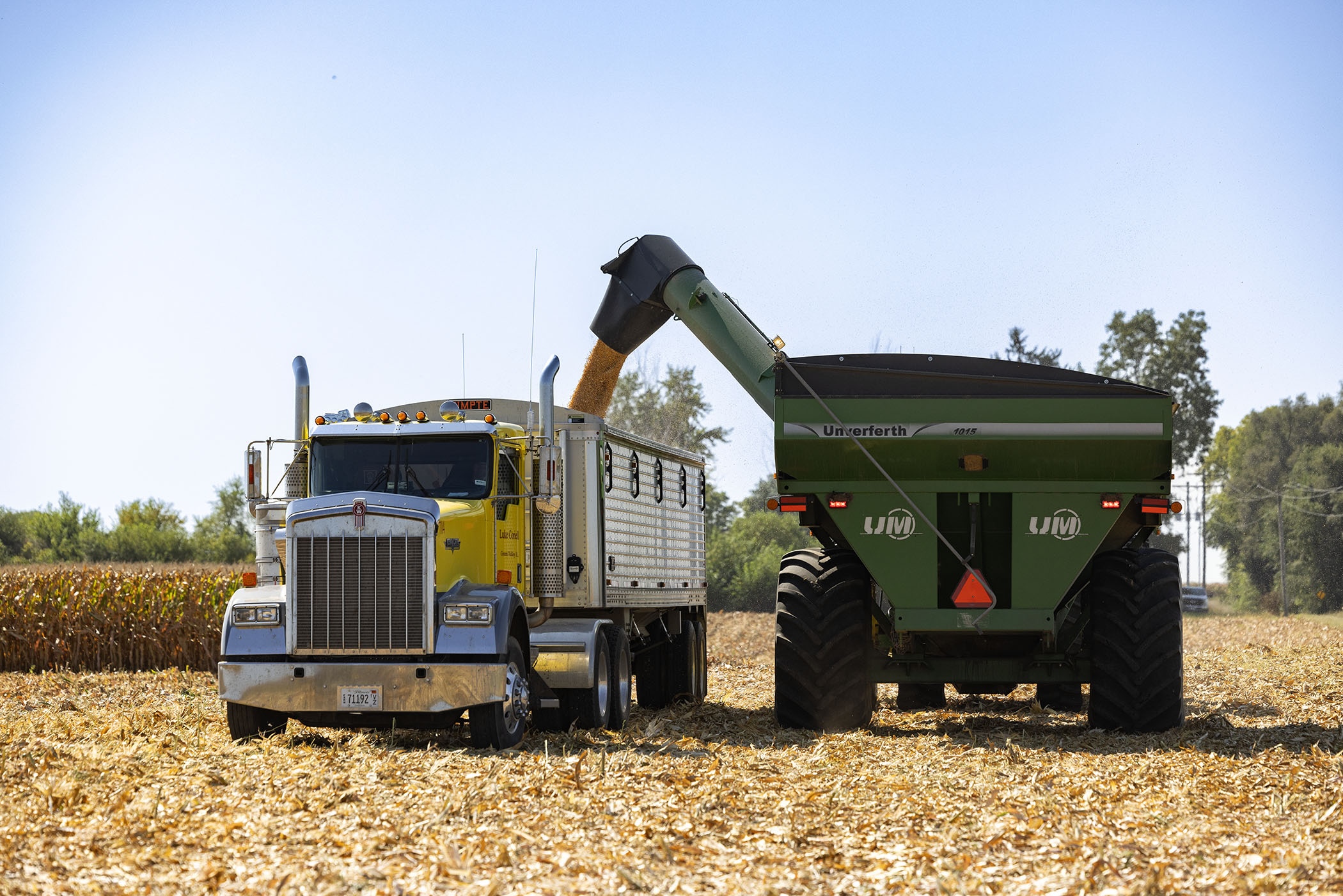
Motorists using dyed diesel fuel in on-road vehicles for agricultural purposes must maintain detailed records to qualify for penalty relief under Gov. JB Pritzker’s Oct. 6 executive order, according to guidance issued Friday, Oct. 9, by the Illinois Department of Revenue (IDOR).
In response to high diesel prices, Pritzker directed IDOR and Illinois State Police to not impose a penalty when dyed diesel fuel from bulk storage is sold or used on highway or state roads for agricultural purposes through the end of the year.
Illinois Farm Bureau urges anyone looking to utilize dyed diesel in their on-road trucks to read the IDOR guidance.
Red-dyed diesel is standard diesel fuel marked with a red dye to indicate it is tax‑exempt and legally restricted to off‑road use such as farming, construction, generators and marine/rail equipment. It is chemically the same as clear on‑road diesel but sold without highway fuel taxes.
According to the IDOR bulletin, failure to provide required documentation during an audit may result in penalties. Documentation of eligibility for penalty relief must be maintained for a period of four years following expiration of the executive order.
To prove eligibility for penalty relief, users must keep the following documentation of dyed diesel used during the relief period of Oct. 6 to Dec. 31:
- License plate number associated with the dyed diesel used
- Gallons used
- Fill-up dates
- Date dyed diesel was last added to the vehicle.
Proof the fuel was used for farming and agricultural purposes, including, but not limited to, the following, as applicable: documentation showing source of origin of agricultural goods, invoices of agricultural goods either received or delivered, waybills or bills of lading, trip sheets, transportation contracts and storage receipts (e.g. grain tickets).
Users of red-dyed diesel on roads should also be aware residual dye can remain in fuel tanks for an extended period, even after switching back to clear diesel.
To avoid penalties once enforcement resumes Jan. 1, users must keep all of the following: documentation showing the vehicle’s odometer reading on the final day of the relief period, receipts for all fuel purchased after dyed diesel use ends and proof the fuel was used for farming and agricultural purposes during the relief period.
Illinois Farm Bureau said the temporary relief does not permanently eliminate fuel tax obligations, and Illinois’ penalty relief does not extend to other states. The organization urges farmers to document everything and have a plan to transition back to clear diesel.
The IRS has not released guidance related to President Donald Trump’s Oct. 5 executive order allowing for red-dyed diesel use on roads and deferring federal diesel fuel tax payment obligations. Without legislative action farmers could still be liable for the federal taxes deferred.
The federal diesel tax is about 24 cents per gallon, while Illinois’ motor fuel tax adds roughly 55 cents per gallon.
This story was distributed through a cooperative project between Illinois Farm Bureau and the Illinois Press Association. For more food and farming news, visit FarmWeekNow.com.