

Farmers urged to budget for equipment repairs amid tight margins
By TAMMIE SLOUP
FarmWeek
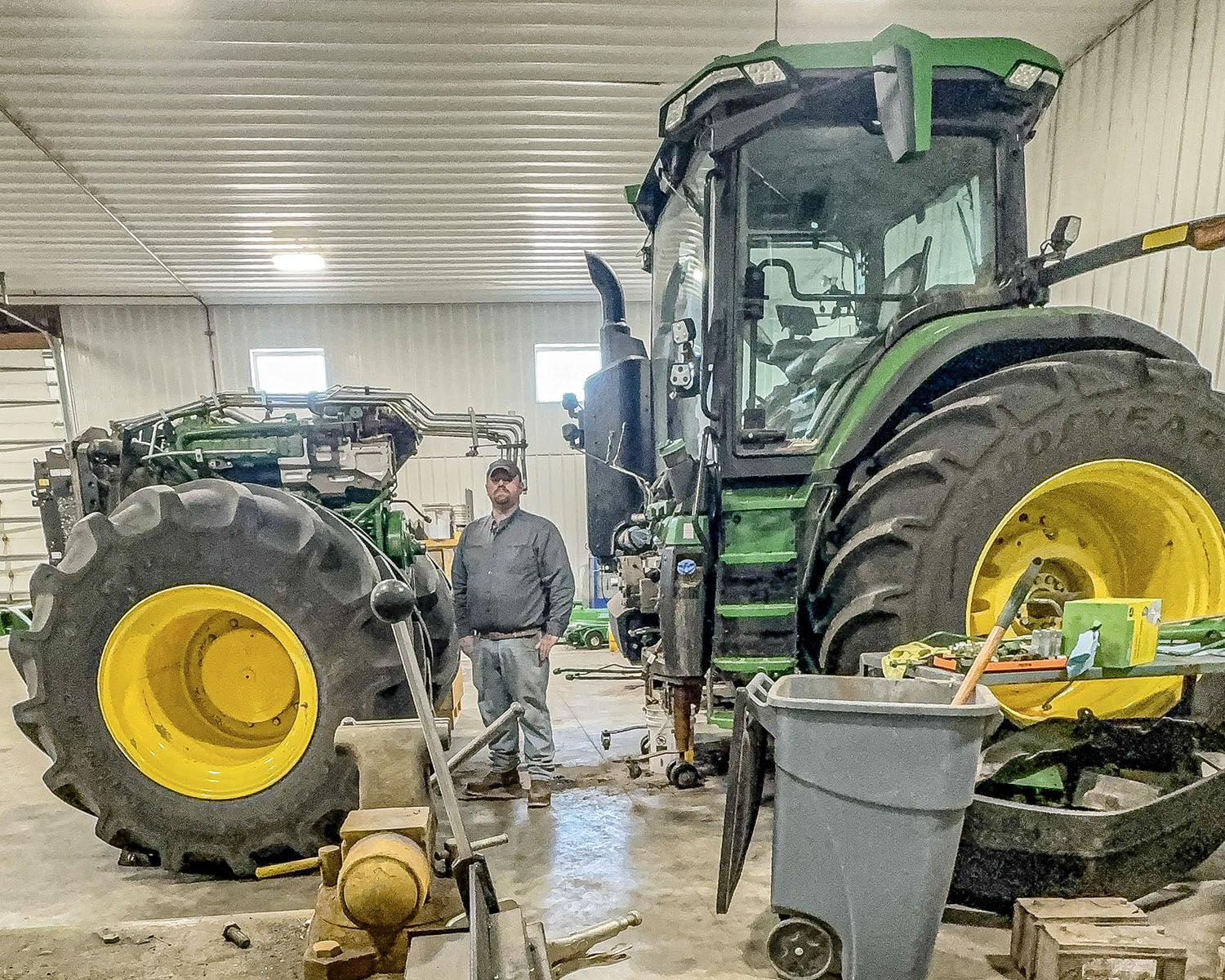
Without a solid warranty and a good relationship with his dealer, Piatt County farmer Jared Gregg’s planting season could’ve gone downhill fast.
“I blew the transmission in a tractor. I had no warning sign of what was going to happen. All of a sudden, the planter just powered down, and at first I thought I hit a button inadvertently, and then come to find out that the transmission, front wheel assist, the hydraulic system — it’s all interlocked in one big hydraulic system — it all went down.”
He estimated the transmission alone cost $80,000, with the total repair cost likely exceeding $100,000.
Luckily, his warranty covered nearly all costs, and his dealer quickly provided a loaner tractor so planting could continue.
Maintaining warranty coverage is critical because repair costs have become extremely expensive, Gregg told FarmWeek. Strong relationships with equipment dealers also are more important than ever when major breakdowns occur.
“Keeping powered equipment in warranty is very, very vital in today’s economy,” Gregg said.
Many farmers facing tighter margins are trying to extend the life of their machinery as costs remain high and are unlikely to decline significantly soon.
Producers are focused on managing risk, preserving cash flow and maximizing the performance of the equipment they already own, Gregg said, adding carefully reviewing warranties is a way farmers can protect their assets in a tough ag economy.
As farmers prepare to budget for 2027, some considerations should be made around their machinery budgets, especially as factors such as aging equipment, technology upgrades and parts availability will eventually force replacement decisions.
<script async src=”https://pagead2.googlesyndication.com/pagead/js/adsbygoogle.js?client=ca-pub-7690895491930777″ crossorigin=”anonymous”></script>
<ins class=”adsbygoogle” style=”display: block; text-align: center;” data-ad-layout=”in-article” data-ad-format=”fluid” data-ad-client=”ca-pub-7690895491930777″ data-ad-slot=”5668649524″></ins>
<script>
(adsbygoogle = window.adsbygoogle || []).push({});
</script>
<h6><em><strong><span style=”color: #ff0000;”>**Editor’s Note: If you find the story here of value, consider clicking one of the Google ads embedded in the story. It costs you nothing but Google will give the website owner a few cents. This is a way to help support local news at no cost to the reader. </span></strong></em></h6>
For farmers considering machinery purchases, Brad Zwilling, vice president of data analysis for Illinois Farm Business Farm Management, offered several pieces of advice:
- Develop a long-term capital replacement plan.
- Create detailed machinery budgets.
- Carefully evaluate loan terms and interest rates.
- Review cash flow and existing debt obligations before making purchases.
- Plan ahead so equipment purchases are strategic rather than reactive.
He stressed the importance of identifying equipment needs early and shopping proactively.
“First make your capital budget to get a good idea of what you know you’re going to have to replace when, and that way you can be in the driver’s seat, so it’s not necessarily a knee-jerk reaction,” Zwilling told FarmWeek.
Kankakee County farmer Grant Senesac stressed preventive maintenance during the offseason helps minimize breakdowns during planting and harvest. He also pays close attention to trade-in values when considering equipment replacement.
“If they’re giving you a good price for your trade, you have to really consider trading at that point because the value of your equipment does go down and depreciates,” he told FarmWeek. “Keeping up (with equipment rotation) is hard, but you do have to do it as much as you can. Maybe not necessarily buying brand new equipment, but stuff that’s maybe a few years old.”
Gary Schnitkey, University of Illinois professor and Soybean Industry Chair in Agricultural Strategy, provided additional equipment management recommendations for farmers, such as evaluating machinery fleet size to avoid owning underutilized equipment.
“Sizing and quantity really matter,” Schnitkey told FarmWeek. “As we’ve seen those (machinery) costs increase, particularly for (relatively new) combines, we’ve got to be using it on 2,000 acres, roughly, and more. If we use it on 1,000, we really increase the cost per acre.”
Equipment-sharing arrangements among neighboring farms also are becoming more common as farmers look for ways to spread costs across more acres, he added.
This story was distributed through a cooperative project between Illinois Farm Bureau and the Illinois Press Association. For more food and farming news, visit FarmWeekNow.com.