


Iran uncertainty blurs fertilizer price outlook
 By TAMMIE SLOUP and RHIANNON BRANCH
FarmWeek
Mason County farmer Courtney Sandidge compared the input price universe for Illinois farmers to the Wild West.
“We don’t really know what’s going to happen and we definitely still have concerns about price moving forward,” Sandidge told FarmWeek, adding inputs seem to be a “black cloud” over the ag industry. “Right now, we’re just trying to hang on and survive through this.”
Sandidge, like other farmers, will soon make plans to purchase inputs for next year’s growing season under worsening economic conditions. An American Farm Bureau Federation analysis released last month predicts 2027 will mark a sixth year of negative returns for farmers.
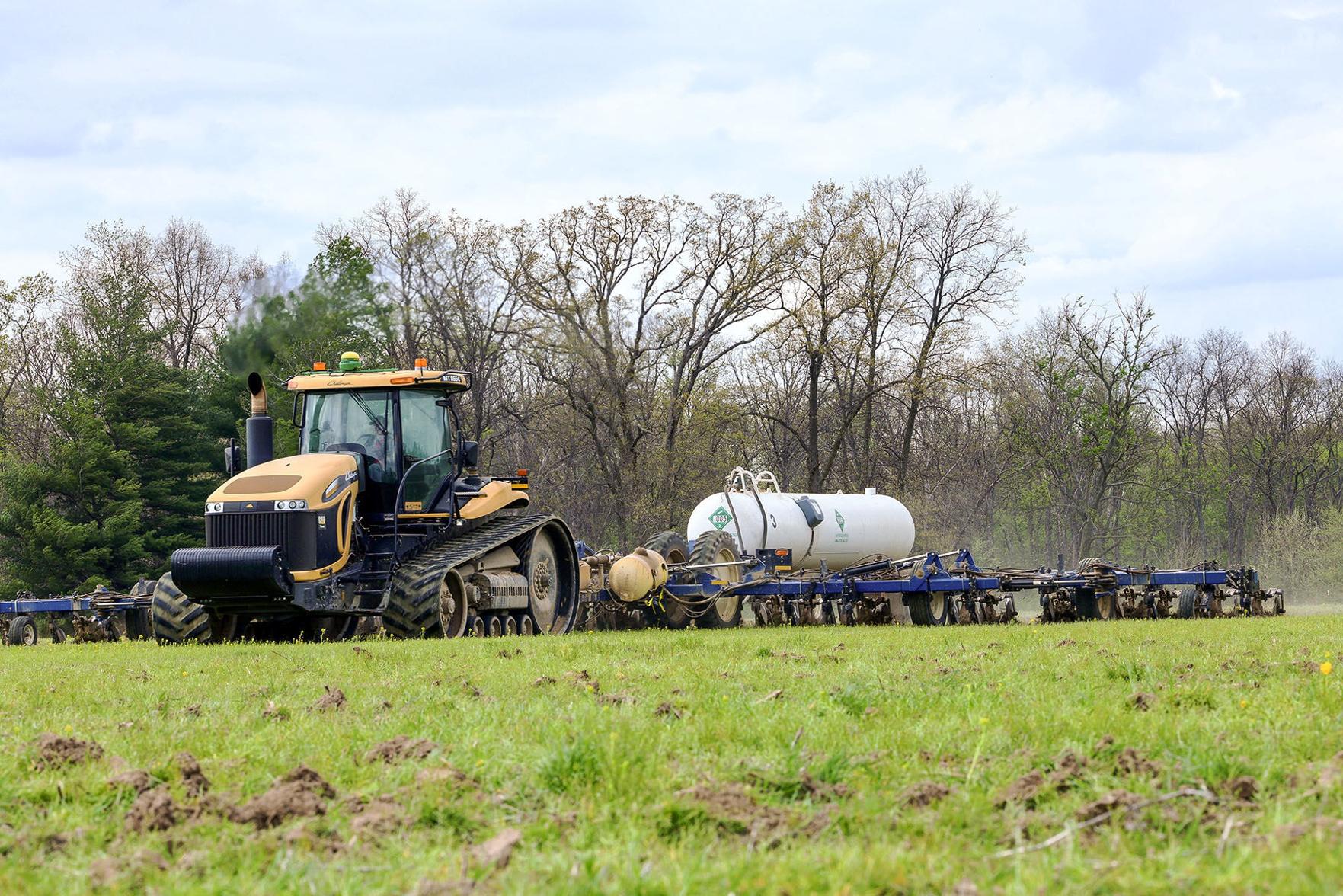
Clark County Farm Bureau President John Yeley saw his anhydrous prices increase from about $800 per ton to $1,000 per ton year-over-year when he purchased in the spring.
“We’ve had higher input prices for four years now, so it’s eating everybody’s reserves up,” Yeley said. “We had another farmer go broke in Clark County. It’s happening more and more. And I talk to people in the finance market, and there’s a lot of guys really stretched. So, looking forward to next year, you’re just going to have to save as much as you can and hope for a better time.”
The strait impact
Preliminary 2027 projections suggest fertilizer costs will remain elevated despite expectations for improved global supply chains, according to a June American Farm Bureau Federation Market Intel. However, with tensions flaring again in Iran and the Persian Gulf, which is a critical global fertilizer hub with about one-third of the world’s fertilizer trade passing through the Strait of Hormuz, fertilizer transportation remains in flux.
The conflict started in late February, just prior to US corn and soybean planting season. About 35% of fertilizer used in the United States is imported, including nitrogen and phosphorus sourced from the Middle East. Around half the global supply of urea originates in the region, along with 30% of ammonia.
“If we assume that the Strait remains questionable to closed, it is hard to see values falling substantially from here,” said Josh Linville, vice president of fertilizer for StoneX, told FarmWeek. “The longer it lasts, the more supply damage done, the more comfortable manufacturers become, which is price supportive.
“Even if the Strait reopens, it still feels/looks like phosphate values will remain high for longer. There are simply too many factors working against lower prices. The best thing going for buyers is the market’s belief that fall demand will be dismal at these prices.”
**Editor’s Note: If you find the story here of value, consider clicking one of the Google ads embedded in the story. It costs you nothing but Google will give the website owner a few cents. This is a way to help support local news at no cost to the reader.
Nitrogen values finally fell from spring highs for the first layers of fill this summer, with some nitrogen forms slightly cheaper while some slightly more expensive than last year, said Linville, adding phosphate values remain incredibly high with “no end in sight.”
Linville also provided import stats, including:
- Urea: 5 of the 12 million tons the US uses are imported
- UAN: Nearly 14 of the 16 million tons used by the US are imported
- NH3: Almost 20 of the 22 million tons used are imported (ag application only accounts for 4 to 4.5 million tons)
- Phosphate: 6 of the more than 8 million tons used are imported
- Potash: Nearly all the 10-plus million tons used in the US are imported (almost 90% comes from Canada)
Linville recommends farmers have more conversations with suppliers.
“Farmers are hurting, which makes folks want to shut down and not think about it,” he said. “Retailers/co-ops are fighting the same price risks. The more conversations that are had, the better chance the market can be prepared for whatever might come.”
He also said to consider buying fertilizer in layers, adding farmers don’t sell all their grain at once but many buy fertilizer at one sitting.
Supply wild cards
Caleb Miller, GROWMARK associate product manager, doesn’t expect any ammonia supply issues this fall because it’s produced domestically.
“We’ve had a summer fill program, which saw good uptake,” he told DeLoss Jahnke with the RFD Radio Network. “There are definitely producers planning ahead and trying to position their tons as we get closer to fall.”
The wild cards, Miller said, are sulfur, an ingredient of phosphate fertilizers, and urea since a large amount of those products are transported through the Strait of Hormuz.
“It seems like there’s something different every day (in the Middle East),” Miller said. “We’re trying to watch it closely, but it’s getting pretty difficult to predict and figure out exactly what’s going on.”
Ammonia prices have reset from the peaks experienced in late April and early May, so Miller expects values to be better for fall. But, as a globally traded commodity, markets can be easily swayed by world events.
Fertilizer prices have been elevated since the Russia-Ukraine war disrupted raw materials and natural gas supplies years ago. China’s decision to cut phosphate exports also tightened the market, with nitrogen fertilizer costs increasing 22% between February 2025 and February 2026, according to the Bureau of Labor Statistics.
IFB working on the issue
“At the end of the day, we need to continue having conversations regarding input costs,” Illinois Farm Bureau President Philip Nelson said. IFB is working closely with industry partners, as companies and retailers will ultimately determine pricing for fertilizer, chemicals and seed, he said.
“While commodity prices have largely reset over the past two years, we have not seen a comparable downward adjustment in input costs,” he said.
Fertilizer prices are having the biggest impact on the Sandidge family farm’s bottom line this year, so they have looked diligently for ways to cut costs without sacrificing yield. Last year, the family built an on-farm anhydrous ammonia facility, allowing them to purchase the product cheaper during the off-season and store it themselves.
“We’re going to start using prescriptions for seed and fertilizer to try and reduce our applications where we don’t need it and maximize efficiency by relocating fertilizer to the acres that do need it,” said Sandidge.
While the changes will help, Sandidge said there is still “major risk” in the input markets.
This story was distributed through a cooperative project between Illinois Farm Bureau and the Illinois Press Association. For more food and farming news, visit FarmWeekNow.com.