
ISU GRAD WAS ON DIVE TEAM TO RAISE THE MONITOR
Scholley Was Part of Challenging Dive to Raise Famed Civil War Ironclad
By Tom Emery
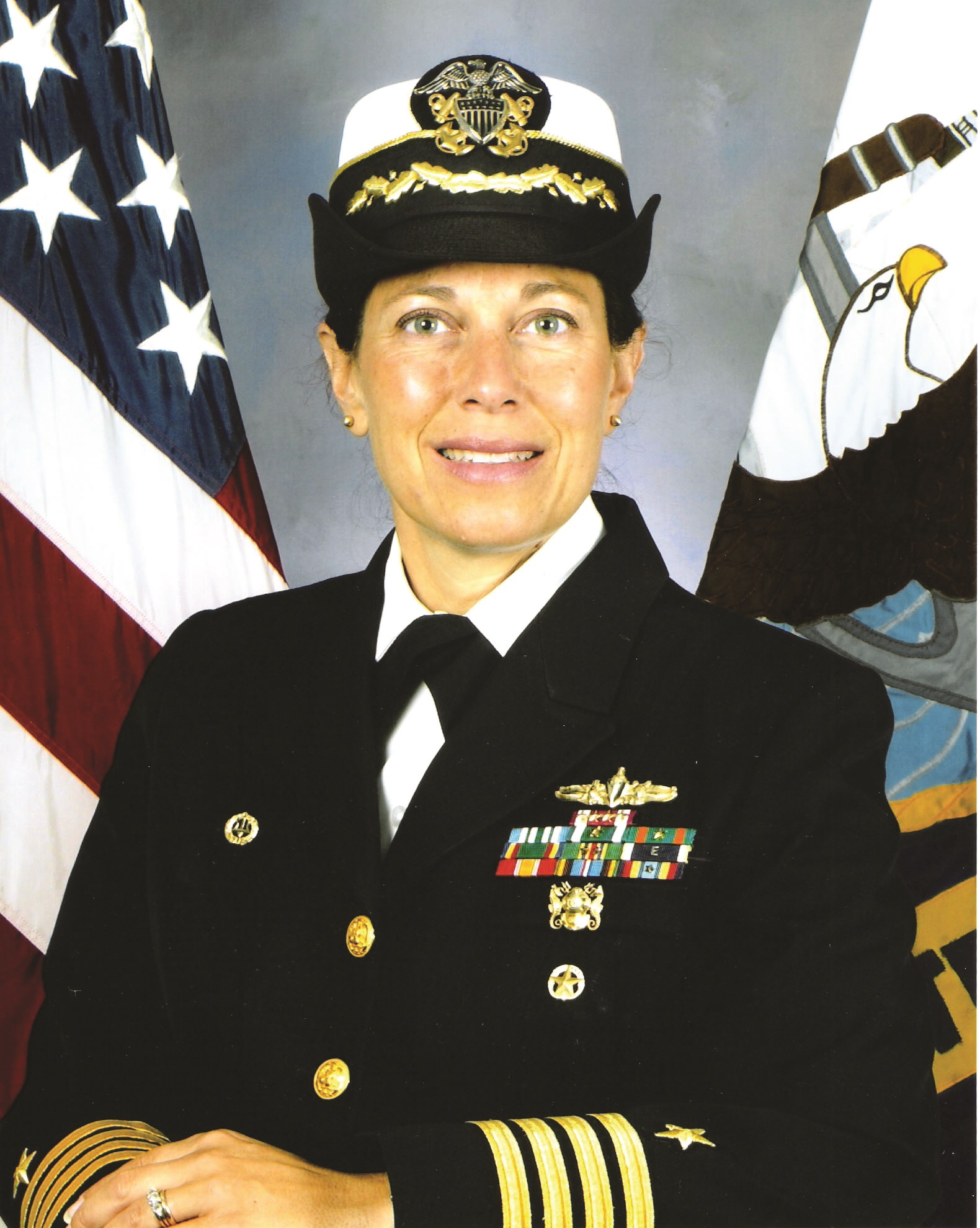
The raising of the Union Civil War ironclad ship Monitor in 2002 was a landmark in historic preservation. An Illinois State University graduate was on the dive team.
Barbara Scholley, a 1980 Illinois State graduate and a distinguished officer in the U.S. Navy, is considered one of the finest Navy divers of her generation, and has held a variety of Commanding Officer positions in her career.
The raising of the Monitor from its wreck site off Cape Hatteras, N.C. is considered an outstanding event in naval history, with one of the best-organized, and most productive dive expeditions ever attempted.
The Monitor is best known for its duel with the C.S.S. Virginia, better known as the Merrimack, in Hampton Roads, Va. on March 9, 1862. It was the first time that iron ships met in combat in world naval history.
The Monitor, which spawned a class of ironclad warships generically known by that name, measured 172 feet long and 41 feet wide, weighing 1,200 tons with a 10.5-foot draw. The vessel sat so low in the water that she was barely discernible, if not for her turret, the defining feature of the ship.
The circular, revolving turret measured twenty feet across and nine feet high, and concealed two guns. The turret allowed the guns to be fired at nearly any angle, compared to previous ships (including the Merrimack), which often had guns only on broadside, at the bow, or stern.
A small pilothouse was one of the few other protusions from the deck. Because of its unusual appearance, the Monitor was dubbed a “cheesebox on a raft.”
The Monitor battled the Merrimack to a draw at Hampton Roads, forever revolutionizing naval warfare. Strangely, neither ship survived for long after the duel. The Merrimack was scuttled two months later to prevent her capture by advancing Union forces.
On Dec. 31, 1862, the Monitor was being towed en route to joining the blockade of Charleston when she foundered in heavy seas sixteen miles southeast of Cape Hatteras. The ship’s entire crew of sixteen men was lost.
The Monitor then laid at the bottom of the sea for the next 140 years. Efforts to locate the wreck began as early as 1973, and by 2002, a comprehensive effort to raise the wreckage began.
**Editor’s Note: If you find the story here of value, consider clicking one of the Google ads embedded in the story. It costs you nothing but Google will give the website owner a few cents. This is a way to help support local news at no cost to the reader.
The divers were led by Scholley, who in 1992 had been only the fourth woman to command a commissioned Navy ship, the USS Bolster, a diving and salvage vessel. She had been the Navy’s first female Supervisor of Diving from 1997-99.
Scholley made 19 dives over the two summers on the Monitor project, working at a depth of 245 feet at a maximum of 35 minutes per dive. One source states that her team “did the necessary salvage work, which included manually fastening the cables that hoisted the engines and gun turret.”
The ship’s 20-ton steam engine was raised in 2001. The raising of the turret in 2002 was the centerpiece of the project, which garnered national media attention and was covered in documentaries on The History Channel and other outlets.
“It is by far the best dive a Navy diver can make,” said Scholley of the Monitor project at the time. “It’s physically and technically challenging. But it’s cool to be working on the forefather of our modern Navy…it’s really wonderful. Being part of history, especially naval history, is really something you can’t put into words.” Scholley considered the Monitor expeditions as “the highlight of my 24-year naval career.”
Prior to that, Scholley held leadership positions on the dive project that recovered wreckage from TWA Flight 800, which crashed into the Atlantic Ocean off New York on July 17, 1996. On that project, she supervised a team of 200 divers, and was on many dives herself.
She was also a leader in the dive recovery of the USS Cole, which was destroyed in a bombing while in a Yemen harbor in 2000.
Scholley graduated from the Basic Diving School in Panama City Beach, Fla. in 1983. A 2000 graduate of the Officer Candidate School in Newport, R.I., she retired with the rank of Captain in August 2005.
In 1994, Scholley was honored as the Illinois State University Distinguished Young Alumni Award, and four years later, she received an honorary doctorate from ISU. She was inducted into the school’s College of Arts and Sciences Hall of Fame in 2005-06.
Tom Emery is a freelance writer and historical researcher from Carlinville, Ill. He may be reached at 217-710-8392 or ilcivilwar@yahoo.com.