

USDA deputy secretary: Input costs under the ‘microscope’
By TAMMIE SLOUP
FarmWeek
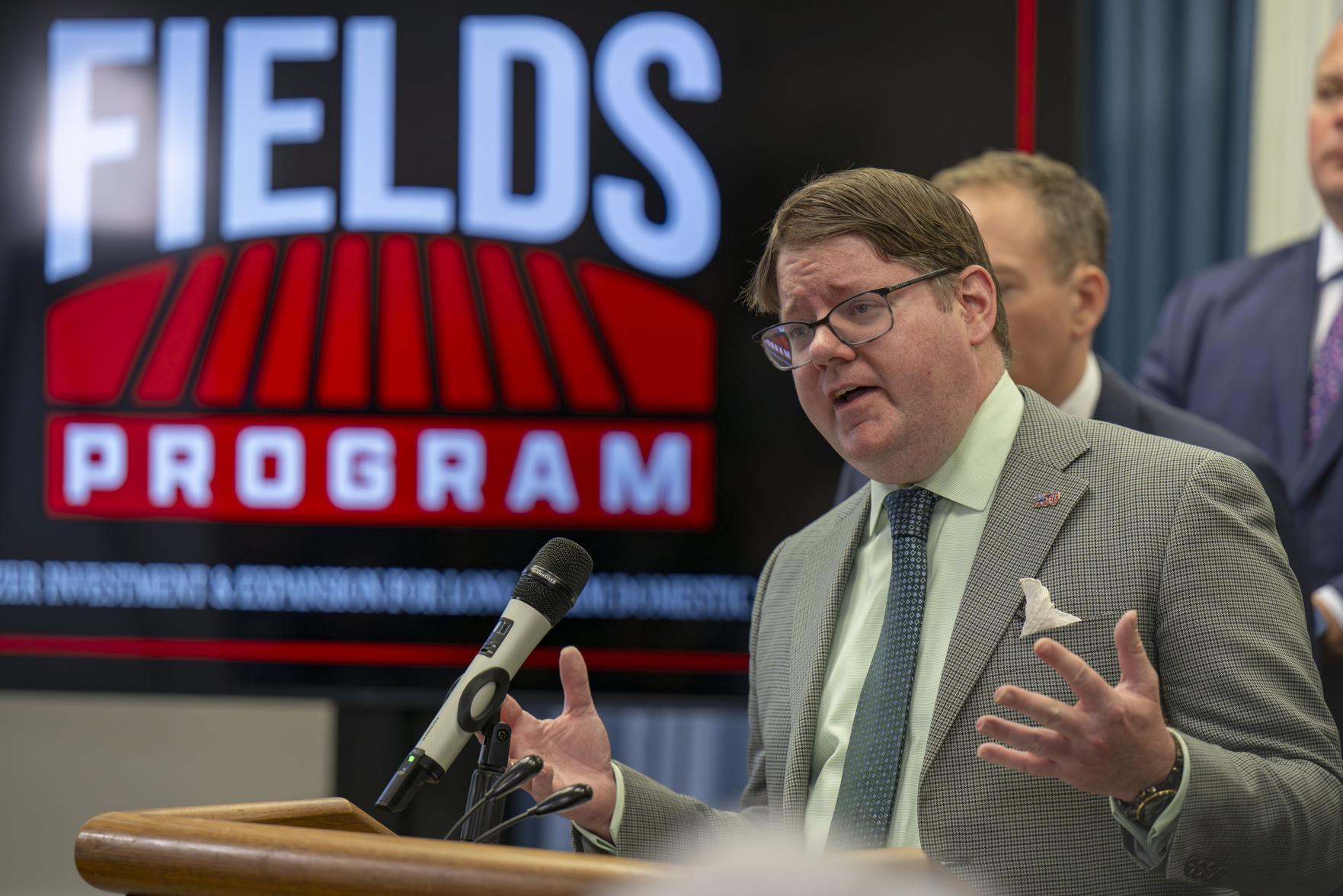
When it comes to fertilizer transportation, the integral Strait of Hormuz waterway is not an on-off switch, it’s more like a valve, according to USDA Deputy Secretary Stephen Vaden.
“And that valve has been blocked up for some period of time,” Vaden told FarmWeek during a recent phone interview.
The strait’s reopening won’t immediately alleviate fertilizer transportation issues because of pre-existing orders, storage capacity constraints and fertilizer facilities being damaged by missiles and other attacks during the conflict.
“It’s going to take a while to catch up to where we should be,” Vaden said. “For things to get back to normal, assuming a perfectly open strait, you’re going to need time to work through what’s already out there. …They are going to need to pare down the inventory that they have built up, that they have filled their storage capacity, and then and only then will you get new production.
“That is something that is not going to be able to take place in a matter of days or weeks.”
The Strait of Hormuz is a critical shipping corridor for key fertilizer materials and finished fertilizer. Nitrogen fertilizer supply chains are closely tied to the Persian Gulf. Countries exposed to disruptions in the region account for nearly 49% of global urea exports and about 30% of global ammonia exports. Fertilizer and fuel prices are largely determined in global markets, meaning US farmers can experience higher input costs even when the Middle East is not the primary direct supplier of specific fertilizer products to the United States.
Speaking to FarmWeek about a week after meeting with state Farm Bureau presidents, including Illinois Farm Bureau President Philip Nelson, Vaden said the administration is doing everything it can to deal with the immediate elevated fertilizer and other input prices.
“But equally as important (the administration wants to) see to it that farmers will not be put in this situation in the future by funding, supporting, removing permitting hurdles, doing everything else that we can in order to see to it that more of these inputs, which agriculture needs, are produced right here in the United States, where we don’t need to worry about an international body of water that heretofore most people have never heard of,” Vaden said.
**Editor’s Note: If you find the story here of value, consider clicking one of the Google ads embedded in the story. It costs you nothing but Google will give the website owner a few cents. This is a way to help support local news at no cost to the reader.
USDA efforts aim to curtail input prices
Vaden noted production costs for farmers have been increasing the past several years — a trend not solely linked to the conflict in Iran.
“I think we’re beginning to see some slow progress when it comes to certain input prices, particularly fertilizer, thanks to the president’s action lifting countervailing duties through February on phosphate fertilizer from Morocco,” Vaden said.
Moroccan fertilizer company OCP is imminently going to ship new supply to the United States, Vaden said, adding his hope is farmers will encourage their local fertilizer dealers to reach out to OCP and make their own orders.
In addition to the policy move, USDA’s $500 million Fertilizer Investment & Expansion for Long-Term Domestic Supply (FIELDS) Program launched July 1 to support construction and expansion of domestic fertilizer production facilities, improve supply chain resilience and enhance long-term affordability for American farmers.
“We’re going to pick projects that already have substantial private capital backing and for which an investment of new money could do one of two things, either — A: Increase the amount of fertilizer the project could put out, or B: Speed up its time frame so that its fertilizer production reaches the American farmer even more quickly,” he said, adding these are not “pie-in-the-sky” projects.
The department also is continuing to work with the Federal Trade Commission and Department of Justice in an antitrust investigation looking at the markets for inputs and whether they are actually free and fair as federal law requires.
Vaden acknowledged skepticism about these efforts but pointed to the investigation into several egg producers as an example of the seriousness of the administration.
The Justice Department’s Antitrust Division, together with 17 state attorneys general, filed a civil lawsuit against Cal-Maine Foods Inc. (Cal-Maine); Hickman’s Egg Ranch Inc. (Hickman’s); and Centrum Valley Holdings LLC, Versova Holdings LLC, and Versova Management Cooperative (Versova) for unlawful coordinated manipulation of egg prices. At the same time, the department filed proposed settlements that will, if approved by the court, prevent these companies from engaging in such coordinated manipulation in the future.
The investigation coincided with record-high US egg prices in 2025, driven partly by a bird flu outbreak that killed millions of laying hens.
“We intend to bring that same microscope to input costs for farmers across the board,” Vaden said. “And my hope is, as I told all of the Farm Bureau presidents a week ago, if farmers have information that we need to know, I hope that they will share it either through their local Farm Bureau, through their member of Congress or reaching out to us directly here at USDA with information about these illegal practices. They can maintain their anonymity.”
This story was distributed through a cooperative project between Illinois Farm Bureau and the Illinois Press Association. For more food and farming news, visit FarmWeekNow.com.