


U.S. planting intentions: Less corn, more soybeans
By RHIANNON BRANCH
FarmWeek
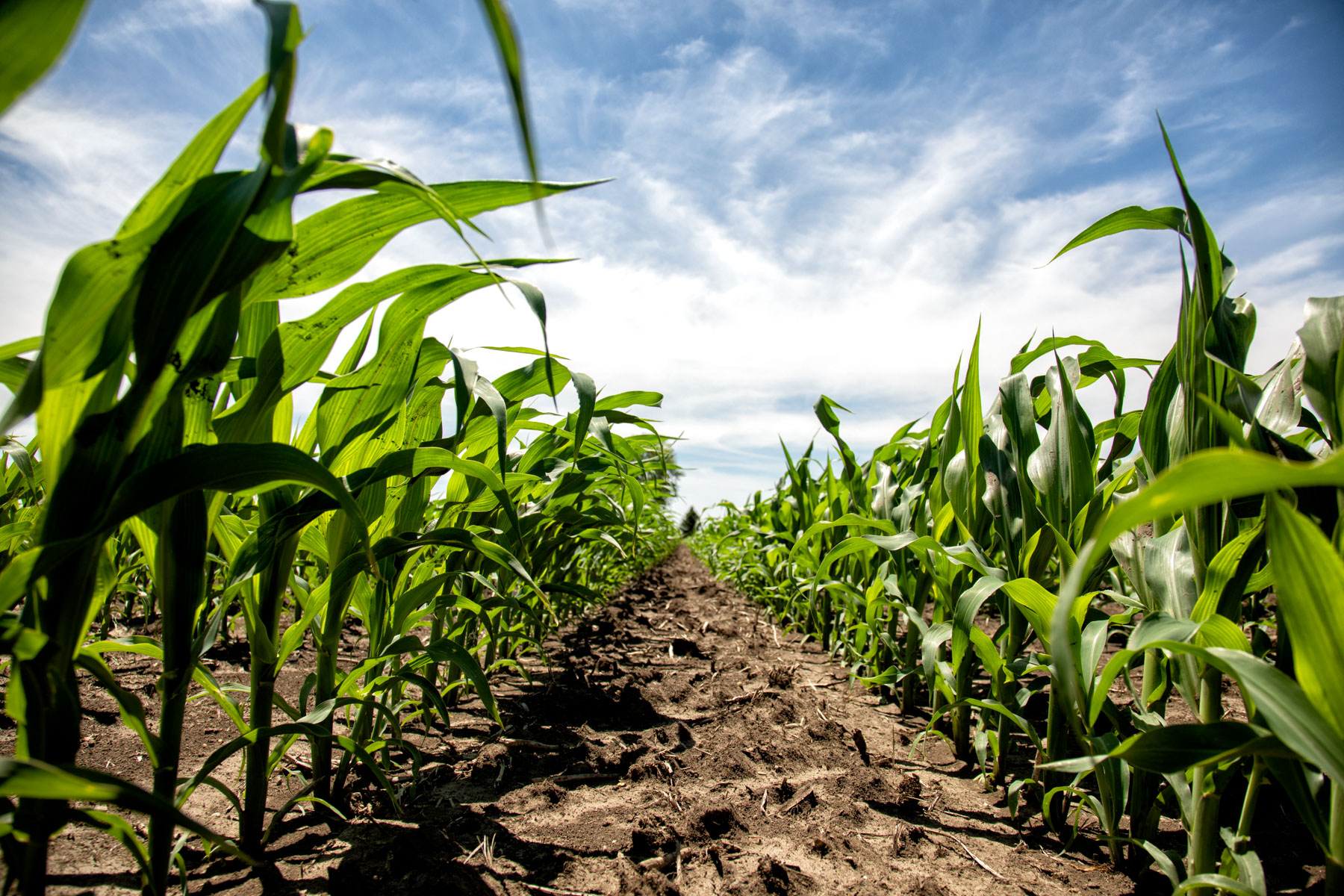
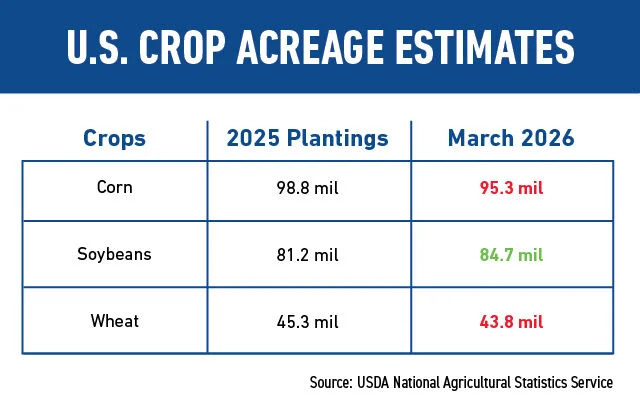
U.S. farmers intend to plant 95.3 million acres of corn in 2026, down 3% from last year, and 84.7 million acres of soybeans, up 4% from last year, according to USDA’s prospective plantings report released March 31.
“The survey suggested corn acres would be switching to soybeans in the season ahead, as expected, but not to as deep of a degree as had been anticipated coming in,” Joe Camp with CommStock Investments told FarmWeek. The average trade guesses were for 94.3 million corn acres and 85.5 million soybean acres.
All wheat planted area for 2026 is estimated at 43.8 million acres, down 3% from 2025. If realized, it would be the lowest total wheat acreage since 1919. Winter wheat planted area, at 32.4 million acres, is down 2% from both the previous estimate and from last year.
The estimates are based on surveys completed by nearly 74,000 farm operators across the nation during the first two weeks of March. USDA’s National Agricultural Statistics Service reported a survey response rate of just 37.6%, down from 44.3% last year.
Camp said the natural swing of crop rotation and commodity prices favoring soybeans are big drivers of the acreage shift, but those who do not have inputs locked in could still be swayed as fields are planted.
“Coming into the report, we were considering the caveats of this season being different because of what’s transpired over the last month,” Camp said. “The changes since (the survey period) are most particularly tied to what’s going on in the Middle East and its ramifications for the energy market, which link back to fertilizer costs and how those go into the decision-making.”
Illinois farmers intend to plant 10.9 million acres of corn this season, down 3% from last year, and 10.5 million acres of soybeans, up 2%.
USDA also released its quarterly grain stocks report.
Corn stocks totaled 9.02 billion bushels, up 11% from the same time last year, and slightly below trade expectations.
Camp said it is interesting to think about how much stocks are up relative to usage in the previous quarter.
“Corn stocks are up 11% from a year ago. That is taken into context with last year being a record 17-plus billion-bushel crop that was 14% bigger than the previous season, so you can have some suggestion about the relative strength of usage here for this last corn crop,” Camp said.
On-farm corn stocks were up 21% from a year ago, while off-farm stocks were down 2%.
“The ratios of off-farm to on-farm stand out,” he said. “If (corn) is largely held on-farm, it’s possible that it’s largely still owned by the farmer. That’s a lot of crop, relatively speaking, that is still left to take to the market, so we think about how that can come into play going forward.”
Soybeans stored as of March 1 totaled 2.10 billion bushels, up 10% from the same time last year. On-farm soybean stocks were up 3% from a year ago, while off-farm stocks were up 16%.
Wheat stored in all positions totaled 1.30 billion bushels, up 5% from a year ago. On-farm all wheat stocks were down 3% from last year, while off-farm stocks were up 8%.
**Editor’s Note: If you find the story here of value, consider clicking one of the Google ads embedded in the story. It costs you nothing but Google will give the website owner a few cents. This is a way to help support local news at no cost to the reader.
Initial market reaction to the reports was positive for soybeans and slightly negative for corn, but Camp said there weren’t any standout bullish numbers.
“I think it leaves the market possibly vulnerable going forward to then getting right back to what’s going on in outside markets and the volatility that we have in the financial spaces and across the broader commodity because of the geopolitical uncertainties and everything else that’s going on,” he said.
Implications from the war remain a sticking point in his long-term market outlook.
“We’re set up for this spring being more of a war market potentially than it is so often a weather market,” he said.
“This big report is now in the rear view and it’s back to trading some very big-ticket items in terms of broader market impacts that we could continue to see with the latest volatility in equities, interest rates, currencies, the metals and oil,” Camp said.
This story was distributed through a cooperative project between Illinois Farm Bureau and the Illinois Press Association. For more food and farming news, visit FarmWeekNow.com.