


Eggs for Easter more affordable than last year
By RHIANNON BRANCH
FarmWeek
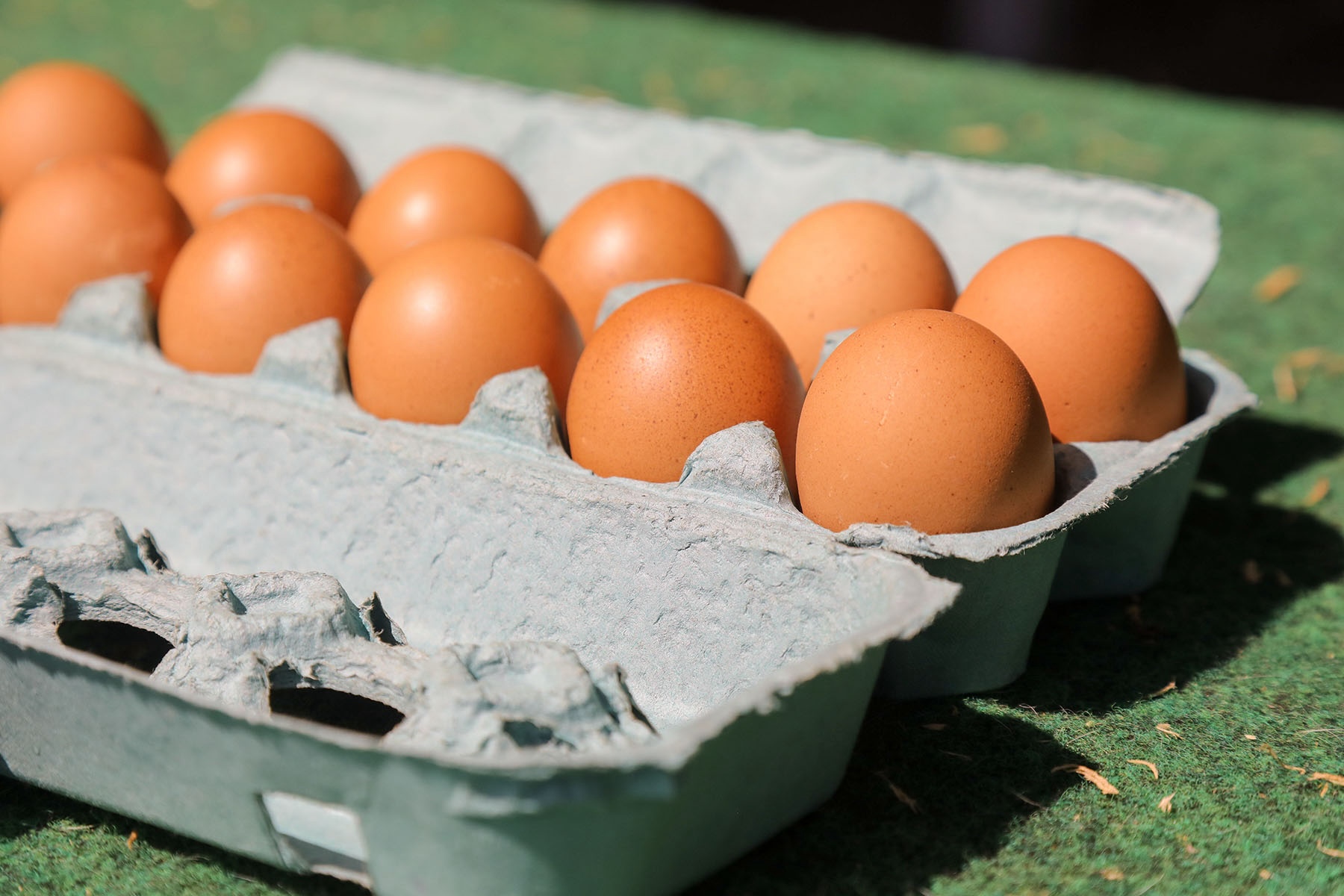
Consumers purchasing table eggs for Easter festivities will be welcomed by a lower price tag at the grocery store this year compared to 2025. However, laying hen depopulations caused by highly pathogenic avian influenza (HPAI) continue to push volatility in the market.
USDA reported as of March 13, HPAI in commercial table egg layer flocks had resulted in the depopulation of 14.2 million birds in 5 states (Colorado, Indiana, North Carolina, Pennsylvania and Wisconsin) so far this year. The losses represent 7.3% of the conventional caged layer flock and 1.7% of the non-organic cage-free flock.
“(HPAI) has not gone away, and it’s still an imminent threat to the table egg-laying population, but it looks like the market is in a little bit better condition this year than what it was last year,” Brian Earnest, lead protein economist with CoBank, told FarmWeek.
Table egg prices typically have a 50-to-75-cent variance throughout the year. But in 2025 prices varied by more than $5. The spread has been shorter to start 2026.
According to USDA, the national average price for conventional hard-shell eggs in mid-March was $1.43 a dozen.
“From a long-term perspective, we’re kind of in line with that dollar a dozen that folks are used to seeing,” Earnest said, noting some regions of Illinois might be experiencing higher prices due to recent depopulations in Wisconsin.
“But I think there is regional production that’s able to absorb those supply challenges a little bit better in the Midwest than what you see on the West Coast,” he said.
**Editor’s Note: If you find the story here of value, consider clicking one of the Google ads embedded in the story. It costs you nothing but Google will give the website owner a few cents. This is a way to help support local news at no cost to the reader.
“So, when it comes to prices, I still think there’s opportunity for retailers to be aggressive with their future activity for Easter this year.”
California has the highest average egg price and tighter supplies largely from a state mandate that only allows for the sale of eggs that were produced in cage-free layer operations.
“We need about one table egg layer for every human in the population. In California, there’s roughly 40 million residents and they’ve only got around 8 million table egg laying hens, so they need to rely on other states for their production of eggs,” Earnest said.
While HPAI continues to loom over the egg market, Earnest said demand for eggs hasn’t cracked.
“The protein space in general has been seeing a lift from this inclusion of more protein in the diet,” said Earnest, who noted eggs generally have a cheaper price point than some other proteins. “People who have tighter budget constraints with inflation need eggs to fit into their needs from both a dietary and a budgetary standpoint.”
The industry is starting to see some expansion because of strong protein demand.
“There was a lot of innovation in the egg space that occurred 10 to 15 years ago, like restaurants offering all day breakfast,” Earnest said. “I think if producers could get more stability from the marketplace, there’s still a lot of room for innovation there.”
This story was distributed through a cooperative project between Illinois Farm Bureau and the Illinois Press Association. For more food and farming news, visit FarmWeekNow.com.
**Editor’s Note: If you find the story here of value, consider clicking one of the Google ads embedded in the story. It costs you nothing but Google will give the website owner a few cents. This is a way to help support local news at no cost to the reader.