


Food banks seek volunteers, donations this winter
By HANNAH SPANGLER
FarmWeek
 Prolonged subzero temperatures haven’t slowed demand at food banks, but they are making key items harder to secure.
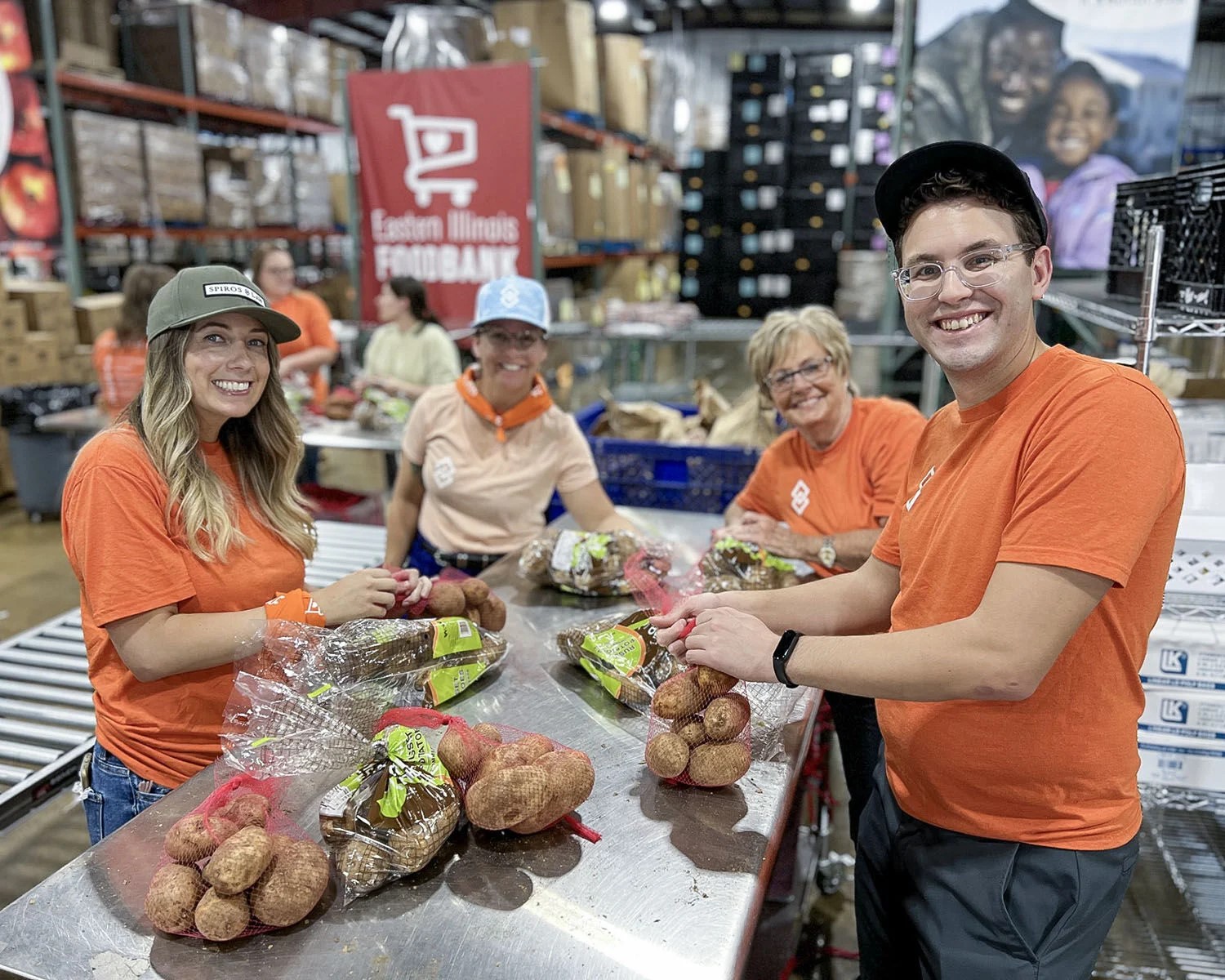
Fresh produce becomes harder to source and move during the winter months, and both Eastern Illinois Foodbank and the Midwest Food Bank report protein, dairy and shelf‑stable foods like soup and peanut butter remain among the most-requested items. Volunteers, especially in January and February, are also harder to come by, creating added strain during a season when demand stays high.
“We know that we’re seeing an unprecedented high need, and I don’t think the weather is going to deter those neighbors that are seeking food assistance from getting out and utilizing the resources that we’re able to provide,” President and CEO of the Eastern Illinois Foodbank Kelly Daly said.
USDA data shows 18.3 million households experienced food insecurity in 2024, representing nearly 48 million people without consistent access to nutritious food. This compares with 13.5 million food‑insecure households in 2023. The Eastern Illinois Foodbank, which serves nearly 200 agency partners in 21 counties, reported more than 143,000 food‑insecure individuals within its service area.
Daly told FarmWeek the food bank has continued operating under arctic‑blast conditions because most of its work “can’t stop, and those neighbors do need that assistance right now.” As part of the Feeding America network, Eastern Illinois Foodbank can source fresh produce from states with longer growing seasons, though Daly said they still try to work with Illinois farmers whenever possible.
**Editor’s Note: If you find the story here of value, consider clicking one of the Google ads embedded in the story. It costs you nothing but Google will give the website owner a few cents. This is a way to help support local news at no cost to the reader.
The Midwest Food Bank is facing similar need and demand for specific items. But as an independent food bank, CEO Eric Hodel said it relies primarily on donated food. Volunteers help pick up products from local grocery stores, and the organization, which works with more than 2,400 agencies in 21 states, East Africa and Haiti, also maintains partnerships with corporations that supply bulk loads when available.
Volunteers are needed to help repackage bulk food items, distribute food and fulfill core roles like building and equipment maintenance, bookkeeping, front desk reception and volunteer group leading.
“Donating time and volunteering hours is tremendously helpful,” Hodel told FarmWeek, adding that volunteer support is especially needed in northern locations such as Illinois — where Midwest Food Bank operates facilities in Morton, Peoria and Bloomington — because many regular volunteers travel to warmer states during the winter.
Both food banks reported donations also make a big difference. Daly said monetary contributions are one of the easiest ways for people to help as the need for food remains high. Hodel added donated dollars help Midwest Food Bank cover basic costs like fuel, insurance and keeping its facilities running, which allows the organization to get donated food to local pantries.
“Less than 1% of our total costs are administrative, so 99.3 cents of every dollar goes to getting food to somebody that’s in need,” Hodel said.
Looking ahead, Daly and Hodel said the priority is to keep food moving to meet community needs. Daly said Eastern Illinois Foodbank will continue showing up for families and encouraging community involvement through donations, volunteering, spreading awareness and food drives. Hodel said Midwest Food Bank aims to bring in as much donated food as possible and redistribute it to partner agencies at no cost.
“We’re continuing into a time where there is some economic and financial uncertainty for a lot of people,” Hodel said. “We have a tremendous opportunity and responsibility to try to give back and take care of our neighbors.”
This story was distributed through a cooperative project between Illinois Farm Bureau and the Illinois Press Association. For more food and farming news, visit FarmWeekNow.com.
**Editor’s Note: If you find the story here of value, consider clicking one of the Google ads embedded in the story. It costs you nothing but Google will give the website owner a few cents. This is a way to help support local news at no cost to the reader.