


New H-2A wage rule ‘step in the right direction’
By TAMMIE SLOUP
FarmWeek
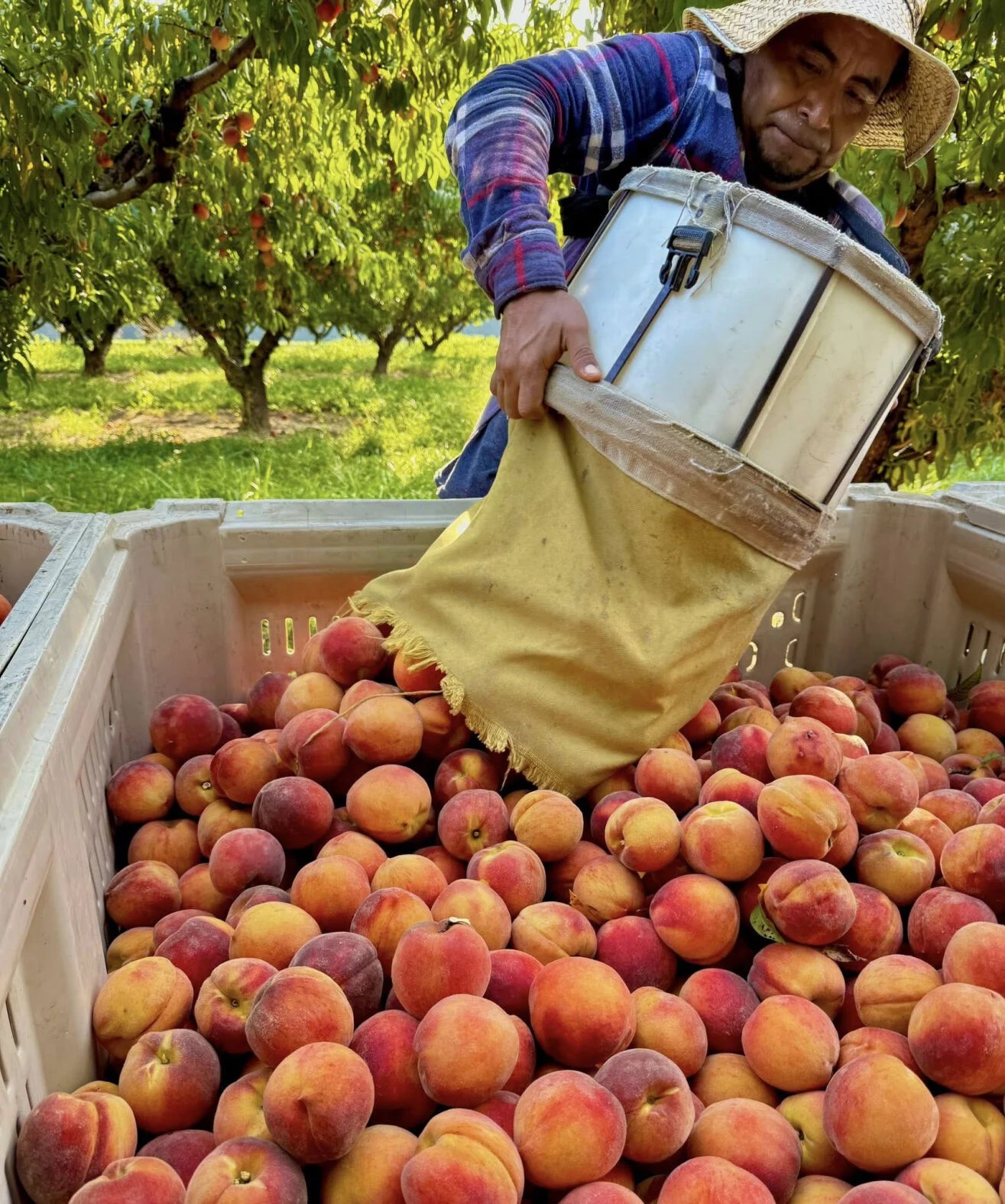
In the mid-2000s, Flamm Orchards in southern Illinois was forced to decide: Move to the H-2A temporary visa program or scale the operation way down?
“We didn’t have the workforce needed to do what we do,” co-owner Austin Flamm told FarmWeek.
The H-2A program allows farmers to bring nonimmigrant foreign workers to the U.S. to perform seasonal or temporary work — typically up to 10 months — when there aren’t enough domestic workers.
Flamm Orchards in Cobden likely wouldn’t exist as it does today without the help of H-2A workers. The orchard grows peaches, apples, strawberries, vegetables and other crops, mainly for commercial business. It takes about 120 employees to run the operation, with about 85 of them H-2A workers from Mexico.
While Illinois isn’t in the top 10 states with the most H-2A workers, the number of certified positions continues to climb, demonstrating the challenges of finding farm labor for both specialty crops and row crops in the state.
Heritage Family Farms in Douglas County faced a similar labor issue about a decade ago, when the Green family began using the H-2A program.
Six generations of the family have worked on the corn and soybean farm, but outside domestic help began to dry up around 2015.
“Back then in our area, we were struggling to find seasonal full-time help,” Monica Green told FarmWeek. “And then COVID happened, … and that kind of exasperated the situation.”
The Greens were drawn to the H-2A program for its guaranteed labor force that’s ready to work and the flexibility from year-to-year.
Elsewhere, five generations of DeGroots have farmed in Kankakee County. DeGroot’s Vegetable Farms presently grows potatoes, bell and jalapeno peppers, zucchini, Hubbard squash, green cabbage and other vegetables. Outside of harvesting potatoes, which is done mechanically, the intense labor required to pick the crops by hand made it hard to find workers locally. That’s when the family turned to H-2A.
“My dad and uncle at the time were trying to figure out how they were going to make it work financially, because obviously you’re not going to put a crop in if you don’t think that you have the workforce that you might need to harvest it,” Aaron DeGroot, a Christian County Farm Bureau member, told FarmWeek.
The same crew from Mexico has returned to the farm year after year, DeGroot said, with the season typically running from June through October to help with weeding and harvest.
All three farmers are appreciative of the relationships with their H-2A employees.
“The program is a blessing for us and it’s a blessing for them,” Green said, sharing the story of one worker from South Africa who puts the money he earns from Heritage Farms into a farm he’s building at home with his brother.
In Illinois, 5,198 H-2A positions were certified in 2024, an increase of nearly 400 over 2023.
**Editor’s Note: If you find the story here of value, consider clicking one of the Google ads embedded in the story. It costs you nothing but Google will give the website owner a few cents. This is a way to help support local news at no cost to the reader.
New DOL rule welcome
While the H-2A program allows for a reliable workforce, costs to farmers have climbed significantly in the past decade.
But farmers could see some relief with the Department of Labor’s new interim final rule.
The new rule for H-2A guestworker Adverse Effect Wage Rates (AEWRs) makes significant changes to the wage calculation for farm laborers nationwide. Eagerly awaited by H-2A employers after the recent cancellation of USDA’s Farm Labor Survey (FLS) and litigation challenging other DOL rules, the rule went into effect as soon as it was posted to the Federal Register on Oct. 2.
The rule revises the methodology for determining the hourly AEWRs for H-2A workers by using wage data reported for each state by the Department’s Bureau of Labor Statistics (BLS) Occupational Employment and Wage Statistics (OEWS) survey, which excludes overtime and bonuses and allows for more granular AEWR calculations than were available under the FLS.
The OEWS wages are not a new factor in the H-2A program. A 2023 wage rule disaggregated wages, eliminating one AEWR for all H-2A workers and instead requiring distinct wages for all Standard Occupation Classification (SOC) codes for job duties beyond what DOL considered farmwork, like driving a truck. Farmers were obligated to pay according to the highest-earning role employees performed, even if it was not their primary role.
However, a federal district court in Louisiana struck down that rule in its entirety nationwide on Aug. 25. These developments preceded DOL’s decision to make the OEWS the sole source of wage data in the H-2A program.
Employers will now pay wages based on tiers of job experience requirements and receive adjustments to offset the nonwage costs of the H-2A program, lowering employment costs for many H-2A workers.
To address differences in compensation between most U.S. workers and H-2A workers who receive employer-provided housing at no cost, the DOL will implement a standard adjustment factor to the AEWR.
Illinois Farm Bureau has long called for reform to the H-2A program that provides farmers with solutions for maintaining a stable, reliable and legal workforce, particularly the wage setting methods and nonwage costs of the program.
The DOL estimates the new rule will save farmers an average of $2.4 billion per year over the next 10 years, allowing farmers to reinvest in their farm, including in new equipment, technologies and employee housing.
The 2025 AEWR in Illinois under the previous 2023 rule was $19.57 an hour, and the new rate is $15.48 for entry-level workers and $18.75 for experienced employees. The adverse compensation adjustment for employers who provide housing is $1.79 per hour.
The adjustment results in nearly immediate savings for every state, however, because H-2A employers must pay the highest of the AEWR, the state or federal minimum wage, some states, including Illinois which has a minimum wage of $15, now face state minimum wages above the AEWR.
While the new rule isn’t a fix-all, farmers say it’s a good start.
Flamm said he anticipates the change will shave about 10-15% off his weekly payroll. Prior to the rule change, about 50 cents of every dollar Flamm Orchards made went back into labor.
“That’s a huge, huge savings for us over the course of our season. So, in that regard, we’re excited,” Flamm said. “We’ll see if it sticks. …There’s a lot of unknowns. At this point, we feel like in the short-term going into next season, it is a win for us.”
Green added the new rule acts like a “reset” of the program, which can be challenging.
“We realize (H-2A workers) are making sacrifices by being here, and we appreciate the sacrifices that they make to be here. And the compensation just needs to be fair,” she said.
DeGroot, whose family has contracted with H-2A crews from Mexico and South Africa about the past five years, said the previous AEWRs and the rate they were increasing was becoming unsustainable.
“If it kept continuing at the pace that it had been, especially as we’re facing low commodity prices across the board, it was really making us have to take a second look at the program,” DeGroot said. “But (the new rule) definitely does provide some short-term relief.”
Outside of the new wage adjustments, DeGroot said the rule also allows for staggered start dates in work orders, which will provide some financial relief and cut down on paperwork.
**Editor’s Note: If you find the story here of value, consider clicking one of the Google ads embedded in the story. It costs you nothing but Google will give the website owner a few cents. This is a way to help support local news at no cost to the reader.
The housing adjustment also is welcome by farmers, as associated costs, such as utilities, continue to climb.
“The fact that they are addressing it is kind of refreshing from the growers’ standpoint,” Green said of the new DOL rule.
Application fees, housing and transportation costs can add up to more than $11,000 per worker, according to American Farm Bureau Association.
Flamm Orchards provides about 90 beds in apartment-style housing spread across the farm.
“We completely maintain and pay all utilities and take nothing in return from the people who actually live there,” Flamm said.
Flamm said he doesn’t expect to roll workers’ pay back to the bottom dollar and was still working on contracts when he talked to FarmWeek this fall.
“We had a conversation with all of our employees and explained to them what’s going on, and honestly, we didn’t get any pushback on it like we expected to,” Flamm said. “And the people who have been here a long time for us, people who have management style roles, we’re not going to take any of them back, because we don’t feel that’s right. But for our H-2A employees that we’re bringing in, they’re all going to get rolled back some.”
Flamm’s H-2A workers, who mainly come from the Oaxaca, Mexico area, make about $14.50 a day in their home country.
“We explained to them that this isn’t Flamm Orchards knocking you back … We’re doing it because everyone in the country is and it’s the only way we can stay viable and compete,” Flamm said.
Since 2005, the AEWR rates have more than doubled, adding to labor costs and threatening profitability and sustainability of farms.
“It’s great news from the employer standpoint,” Flamm said of the new rule. “Regardless of what you like and don’t like about the H-2A program, it’s vital to our business and many like ours … It seems like every year, more and more jobs go toward H-2A versus domestic, and I don’t think we’ll ever see that trend change. So, it’s nice to finally have a win on our side of things to help mitigate some of these huge increases that we’ve seen over the last decade. But, you know, it’s still not perfect, but it’s a step in the right direction.”
This story was distributed through a cooperative project between Illinois Farm Bureau and the Illinois Press Association. For more food and farming news, visit FarmWeekNow.com.