


New dietary guidelines issued
By TAMMIE SLOUP
FarmWeek
U.S. Department of Health and Human Services Secretary Robert F. Kennedy, Jr., and USDA Secretary Brooke Rollins on Jan.7 released the dietary guidelines for Americans, 2025-2030, marking the most significant reset of federal nutrition policy in decades, according to a news release from the secretaries.
The topline message: Eat real food.
“To Make America Healthy Again, we must return to the basics. American households must prioritize diets built on whole, nutrient-dense foods — protein, dairy, vegetables, fruits, healthy fats and whole grains. Paired with a dramatic reduction in highly processed foods laden with refined carbohydrates, added sugars, excess sodium, unhealthy fats and chemical additives, this approach can change the health trajectory for so many Americans,” according to a message from the secretaries at realfood.gov.
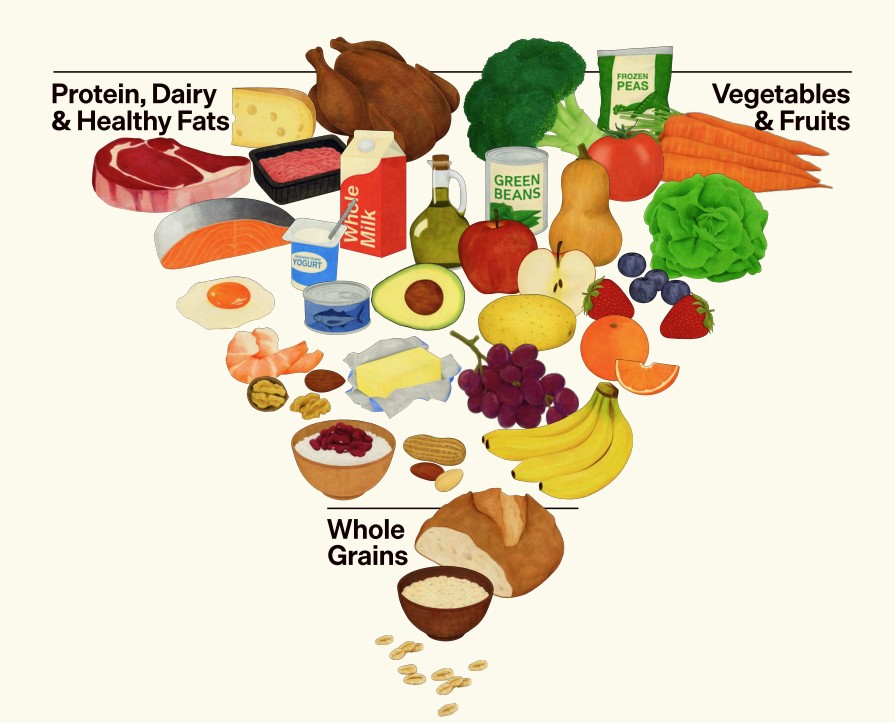
The guidelines “reestablish food — not pharmaceuticals — as the foundation of health and reclaim the food pyramid as a tool for nourishment and education,” the news release states.
“The dietary guidelines are the foundation to dozens of federal feeding programs and today marks the first step in making sure school meals, military and veteran meals, and other child and adult nutrition programs promote affordable, whole, healthy, nutrient-dense foods,” a White House fact sheet stated.
The guidelines “emphasize simple, flexible guidance rooted in modern nutrition science,” and include:
**Editor’s Note: If you find the story here of value, consider clicking one of the Google ads embedded in the story. It costs you nothing but Google will give the website owner a few cents. This is a way to help support local news at no cost to the reader.
- Prioritize protein at every meal (previous recommendations called for 0.8 grams of protein per kilogram of body weight and the new recommendation is 1.2 to 1.6 grams of protein per kilogram)
- Consume full-fat dairy with no added sugars (dairy goal is 3 servings per day as part of a 2,000-calorie dietary pattern)
- Eat vegetables and fruits throughout the day, focusing on whole forms
- Incorporate healthy fats from whole foods such as meats, seafood, eggs, nuts, seeds, olives and avocados
- Focus on whole grains, while sharply reducing refined carbohydrates
- Limit highly processed foods, added sugars and artificial additives
- Eat the right amount for you, based on age, sex, size and activity level
- Choose water and unsweetened beverages to support hydration
- Limit alcohol consumption for better overall health.
Meat and dairy groups praised the new guidelines, while the American Soybean Association released a statement noting its concern the report calls into question the process of soybean oil extraction.
“Soybean oil and soy protein play a critical role in the health and nutrition of Americans. U.S. soybean farmers are proud to grow a heart-healthy and high-protein crop that can feed the country and the world,” said ASA President and Ohio farmer Scott Metzger. “ASA appreciates that the 2025-2030 dietary guidelines for Americans acknowledge the importance of soy as part of a well-balanced diet, but we remain deeply concerned by the rhetoric and selectively cited studies regarding the health and safety of soybean oil in (dietary guidelines) supporting material.”
The guidelines are a whole food framework intended to be customized to individuals and families, and their needs, preferences and financial status.
“We are restoring common sense, scientific integrity and accountability to federal food and health policy, and we are reclaiming the food pyramid and returning it to its true purpose of educating and nourishing all Americans,” the secretaries said. “These guidelines call on every American to eat more real food. They call on farmers, ranchers, health care professionals, insurers, educators, community leaders, industry and lawmakers across all levels of government to join in this critical effort.
“Together, we can shift our food system away from chronic disease and toward nutrient density, nourishment, resilience and long-term health.”
This story was distributed through a cooperative project between Illinois Farm Bureau and the Illinois Press Association. For more food and farming news, visit FarmWeekNow.com.