


Pollination issues add to crop concerns around Illinois
By DANIEL GRANT
FarmWeek
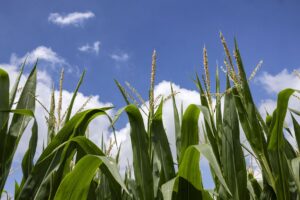
Recent rounds of “million-dollar rains” helped crops in many areas deal with the stress of heat indices in excess of 100 degrees.
But the crops are far from made as issues ranging from poor pollination to disease pressure threaten to take the top end off yield potential.
The portion of the crop rated good to excellent nationwide decreased a point for corn to 73% and increased by 2 points to 70% for soybeans as of July 28 compared to the previous week, USDA reported.
“We’re really fortunate. We got 3 to 4 inches (of rain) right before the latest heat wave,” Ryan Gentle, agronomy manager for Wyffels Hybrids, told DeLoss Jahnke of the RFD Radio Network.
“We’d be in a lot worse shape if we didn’t get that,” he said. “We’ve got good (yield) potential, but we need a few more showers through August.”
Pollination issues pop up
**Editor’s Note: If you find the story here of value, consider clicking one of the Google ads embedded in the story. It costs you nothing but Google will give the website owner a few cents. This is a way to help support local news at no cost to the reader.
One issue that’s caught a lot of farmers off guard is poor pollination in some fields caused by tight tassel wrap. The relatively new phenomenon is caused during excessive growth of the corn plant when not many branches are available to pop the last leaf open during pollination, so a small portion of the tassel must pollinate the whole ear.
“It’s a factor of a few different things from what we’ve been seeing,” said Gentle, who hasn’t found the issue yet in Wyffels hybrids. “It’s part environmental, genetics and what the industry has selected for.”
Large corn tassels can produce up to 4 million pollen grains while even “normal” sized tassels produce up to 2 million pollen grains. But it takes about only 1,000 to fertilize an ear, so the seed industry subsequently selected genetics over the years for corn that doesn’t use as much energy to produce the pollen grains, according to Gentle.
But stress from extreme heat this year made it more difficult for the smaller tassels to emerge in some fields, which led to pollination issues. The average overnight temperatures from June 15 through July 15 were the fifth hottest for that 30-day stretch in more than a century, Gentle reported.
“In genetics and hybrids that aren’t affected, we’ve got pretty normal pollination out there,” Gentle said. “But, in some fields I’ve looked at I’ve seen anywhere from 10 to 40% of ears affected. And of those affected, I’ve seen anywhere from 10% of kernels missing to up to 50%.
“If you’re worried, call your seed rep and get out and look,” he said. “Even if you take 10-15% off the top of 240-250-bushel corn, that adds up really fast.”
Jeff Guilander, FarmWeek CropWatcher from Jersey County, reported problems with tight tassel wrap in his area.
“Green snap, twisted tassels and husks that are too tight around the ear seem to be of concern,” Guilander said. “It makes me wonder about the record yield (181 bushels per acre for corn) USDA is expecting.”
**Editor’s Note: If you find the story here of value, consider clicking one of the Google ads embedded in the story. It costs you nothing but Google will give the website owner a few cents. This is a way to help support local news at no cost to the reader.
Crop diseases on the move
Meanwhile, farmers continue to apply fungicides as the heat and humidity in July was a good recipe for the spread of crop diseases. Tar spot and southern rust have already been confirmed at numerous locations around the state.
“In my area, gray leaf spot is the trigger for many of the fungicide applications,” Gentle said. “And we’ve also had reports of southern rust. It blows up on storms, and we’ve had plenty of those.”
Tar spot typically spreads when conditions are humid and cool, so cooler weather to start August could be something to watch.
CropWatchers Daniel Herriott, Champaign County, and Josh Sullivan, Christian County, both reported farmers are using more drones in their areas to apply fungicides this year than in the past.
“This year, (the use of drones) has certainly picked up significantly,” Herriott told RFD’s Jim Taylor. “We’re very fortunate. We’ve had pretty good moisture, so the crops are handling the stress nicely so far.”
This story was distributed through a cooperative project between Illinois Farm Bureau and the Illinois Press Association. For more food and farming news, visit FarmWeekNow.com.